![[Staging] Willie Duggan](https://staging.willieduggan.com/content/uploads/2017/10/logo.svg)
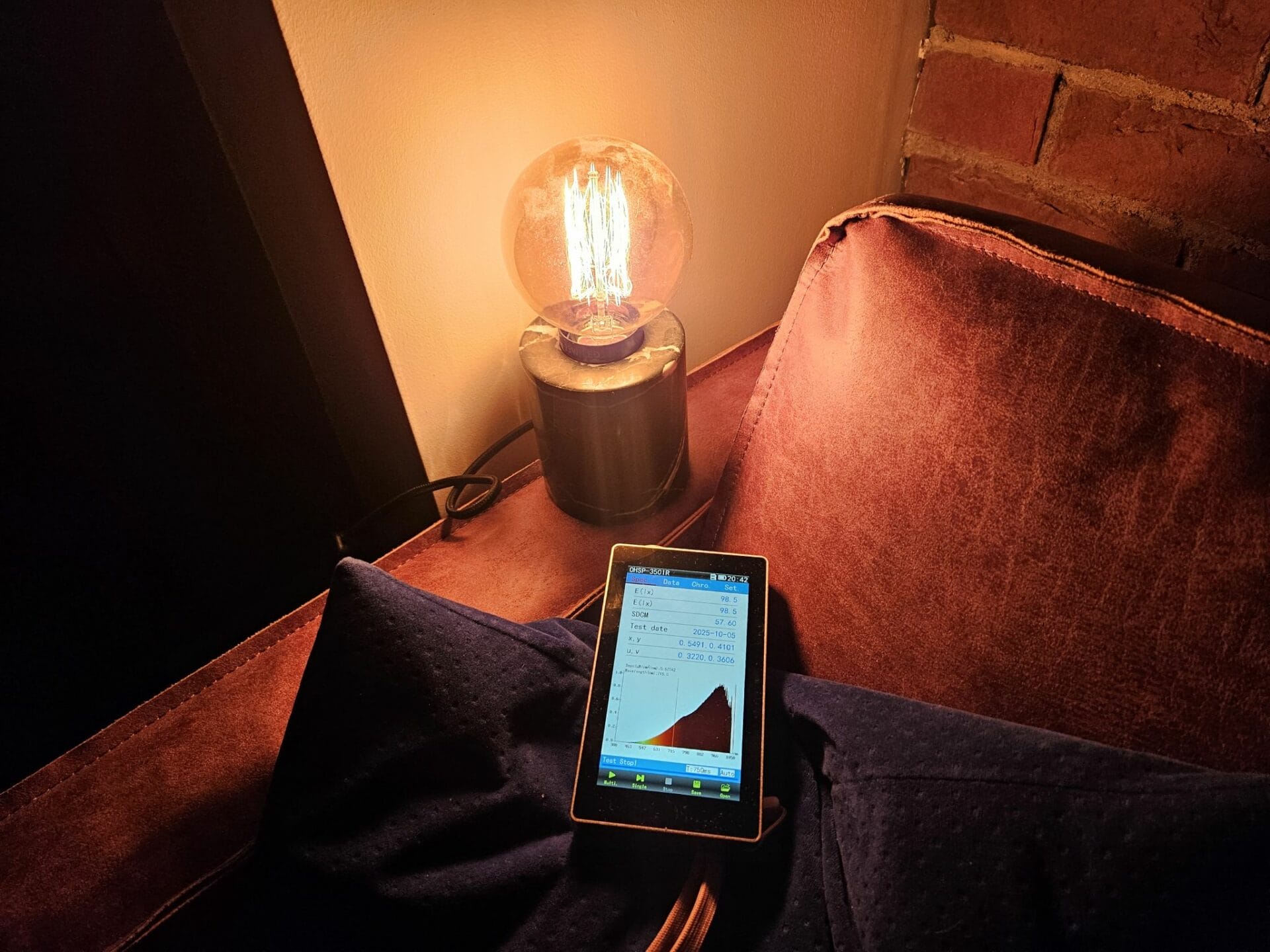

If you are reading this blog, you may have attended my talk at Light25, “Out of Our Lane: What Lighting Designers Must Learn from Medicine”. This blog is designed as a place to dig deeper into the studies, ideas, and conversations we explored during the talk.
Rethinking Our Duty of Care
As I highlighted during the session, lighting designers today hold a responsibility that extends far beyond aesthetics. We have a duty of care to understand and acknowledge the biological side effects of the systems and products we specify.
It has been nearly 50 years since the discovery of the human biological clock, and almost 20 years since the WHO classified artificial light at night as a probable carcinogen. Yet as an industry, we still have not moved. The medical literature is clear. Light is foundational.
Light directly influences:
- The circadian system, which is the body’s operating system, affecting hormonal timing, metabolism, immune function and behaviour.
- Mitochondria, which are the energy engines of nearly every cell, are sensitive to wavelength and intensity.
Natural daylight manages these systems with a constantly evolving recipe of light, shifting colour, intensity and spectral distribution in a way no static artificial source can replicate. It gives us optimal signals at the optimal times every day.
If we are serious about designing for health, we need to tear up the old copybook and rebuild our approach from first principles.
A New Design Mindset
We must shift from siloed thinking and instead treat all light as one continuous environment including screens, daylight and artificial lighting together. The body does not separate them, so our design philosophy cannot separate them either.
This demands:
- Interdisciplinary collaboration with lighting designers working beside medical professionals, neuroscientists, architects, technologists and clients
- Humility in acknowledging that the science will evolve and our design frameworks must evolve with it
- Courage in being willing to speak openly about risks and to advocate for healthier solutions
By embracing this broader responsibility, we have the opportunity to become architects of healthier environments that allow people not only to function but to thrive.
Who We Are
Curious how we’re applying this thinking in real projects? Here’s a bit about our approach and our studio:
If you are curious about how we are applying this thinking in real projects, we are exploring these ideas across homes, workplaces and public environments. Each project becomes a living laboratory where we test what healthier lighting can truly look and feel like.
Click here to view a sample of our work.
Key Takeaways to Keep Thinking About
- Light is biological, not just visual.
It influences cellular processes, hormonal regulation, sleep, mood and long-term health. - Designers must become stewards of health.
Our choices have measurable physiological impacts. - Daylight is still the gold standard.
Artificial light must be approached with caution, intentionality and scientific grounding.
Let’s Keep the Conversation Going
If you have questions, challenges, ideas or a project that may benefit from a more health-driven lighting approach, we would love to continue the conversation.
Thank you again for being part of this change. When science, design and human empathy come together, we can create a future where light heals rather than harms.
Willie
REFERENCES
GENERAL REFERENCES
Giovannini, L., Lo Verso, V. M. R. M., & Pellegrino, A. (2024). Analysis of integrative lighting through field measurements and annual daylight simulations in offices. Lighting Research and Technology, 57(4–5). https://doi.org/10.1177/14771535241311606
Moore Ede, M. (n.d.). The light doctor 2 Goodbye milky. https://lightdoctormartinmooreede.substack.com/p/the-light-doctor-2-goodbye-milky
Heschong, L., Lang, R. A., & Vemaraju, S. (2024). New dimensions of daylight and health How opsin biology may inform lighting standards in the near future. Lighting Research and Technology. https://doi.org/10.1177/14771535251368368
Hönekopp, A., & Weigelt, S. (2023). Using light meters to investigate the light myopia association A literature review of devices and research methods. Ophthalmology and Therapy, 17, 2737–2753. https://pmc.ncbi.nlm.nih.gov/articles/PMC10517690/pdf/opth-17-2737.pdf
ARTIFICIAL LIGHT RISKS
Windred, D. P., Burns, A. C., Lane, J. M., & Cain, S. W. (2024). Brighter nights and darker days predict higher mortality risk A prospective analysis of personal light exposure in more than 88000 individuals. Proceedings of the National Academy of Sciences, 121(43), e2405924121. https://doi.org/10.1073/pnas.2405924121
BLUE BLOCKING GLASSES
Burkhart, K., & Phelps, J. R. (2009). Amber lenses to block blue light and improve sleep A randomized trial. Chronobiology International, 26(8), 1602–1612. https://pubmed.ncbi.nlm.nih.gov/20030543/
Henriksen, T. E., Skrede, S., Fasmer, O. B., Schoeyen, H., Leskauskaite, I., Bjørke Bertheussen, J., Assmus, J., Hamre, B., Grønli, J., & Lund, A. (2016). Blue blocking glasses as additive treatment for mania A randomized placebo controlled trial. Bipolar Disorders, 18(3), 221–232. https://pubmed.ncbi.nlm.nih.gov/27226262/
DAYLIGHT STUDIES
Wright, K. P., McHill, A. W., Birks, B. R., Griffin, B. R., Rusterholz, T., & Chinoy, E. D. (2013). Entrainment of the human circadian clock to the natural light dark cycle. Current Biology, 23(16), 1554–1558. https://pubmed.ncbi.nlm.nih.gov/23910656/
Stothard, E. R., McHill, A. W., Depner, C. M., Birks, B. R., Moehlman, T. M., Ritchie, H. K., Guzzetti, J. R., Chinoy, E. D., LeBourgeois, M. K., Axelsson, J., & Wright, K. P. (2017). Circadian entrainment to the natural light dark cycle across seasons and the weekend. Current Biology, 27(4), 508–513. https://pubmed.ncbi.nlm.nih.gov/28162893/
INTEGRATIVE LIGHTING STUDIES
Zhang, R., Campanella, C., Aristizabal, S., Jamrozik, A., Zhao, J., Porter, P., Ly, S., & Bauer, B. A. (2020). Impacts of dynamic LED lighting on the well being and experience of office occupants. International Journal of Environmental Research and Public Health, 17(19), 7217. https://pubmed.ncbi.nlm.nih.gov/33023141/
Turley, K. (2025). A review of integrative dynamic lighting and associated well being impact for people living with dementia. Lighting Research and Technology. https://doi.org/10.1177/14771535251315476
Collier, J. M., Wilkerson, A., Durmus, D., & Rodriguez Feo Bermudez, E. (2023). Studying response to light in offices A literature review and pilot study. Buildings, 13(2), 471. https://doi.org/10.3390/buildings1302047
General References
International Association of Lighting Designers. (2025). Lighting design for health, wellbeing and quality of light: A holistic approach to integrative lighting [White paper]. https://iald.org/IALD/IALD/Store/Item_Detail.aspx?iProductCode=IR-2025-WP-LDH&Category=IR
Moore-Ede, M., & Blask, D. E. (2023). Lights should support circadian rhythms: Evidence-based scientific consensus. Circadian Light Research Center. https://www.researchgate.net/publication/367276126_Lights_Should_Support_Circadian_Rhythms_Evidence-Based_Scientific_Consensus
Moore-Ede, M. (n.d.). The Light Doctor. Substack. https://lightdoctormartinmooreede.substack.com/about
Podcasts and Institutions
Huberman, A. (2022, January 10). Using light (sunlight, blue light & red light) to optimize health [Audio podcast episode]. In Huberman Lab. YouTube. https://www.youtube.com/watch?v=UF0nqolsNZc
Quantum Biology Collective. (n.d.). Institute of Applied Quantum Biology. https://www.quantumbiologycollective.com/
Quantum Biology Collective. (n.d.). Quantum Biology Collective Podcast. Spotify. https://open.spotify.com/show/4JnpMpZCNFtE5QUOTIpGjf?si=c8e83035eaf74a57
Duggan, W. (n.d.). QBC No.119 – Willie Duggan on Light, Emotion & Human-Centric Design [Audio podcast episode]. Quantum Biology Collective Podcast. Spotify. https://open.spotify.com/episode/2I0a4gBiw3nvDrotVwAVql?si=cee99fb5e8c44ad3
Zimmerman, S. (n.d.). QBC No.79 – Scott Zimmerman on Circadian Lighting and Biophilic Design [Audio podcast episode]. Quantum Biology Collective Podcast. Spotify. https://open.spotify.com/episode/45ODq4QseugPQw12AbKnZq?si=61266248b5d44da9
Red and Infrared Light
Powner, M. B., & Jeffery, G. (2024). Light stimulation of mitochondria reduces blood glucose levels. Journal of Biophotonics. https://onlinelibrary.wiley.com/doi/full/10.1002/jbio.202300521
Shinhmar, H., Hogg, C., Neveu, M., & Jeffery, G. (2021). Weeklong improved colour contrast sensitivity after single 670 nm exposures associated with enhanced mitochondrial function. Scientific Reports, 11, Article 22872. https://www.nature.com/articles/s41598-021-02261-z
Desmet, K. D., Paz, D. A., Corry, J. J., Eells, J. T., & Wong-Riley, M. T. T. (2006). Clinical and experimental applications of NIR-LED photobiomodulation. Photomedicine and Laser Surgery, 24(2), 121–128. https://pubmed.ncbi.nlm.nih.gov/16706690/
Kim, Y. J., Kim, H. J., Kim, H. L., Lee, T. R., & Shin, D. W. (n.d.). A protective mechanism of visible red light in normal human dermal fibroblasts: Enhancement of GADD45A-mediated DNA repair activity. Journal of Investigative Dermatology. [DOI or URL needed]
Light at Night and Health Risks
Windred, D. P., Burns, A. C., Lane, J. M., & Cain, S. W. (2024). Brighter nights and darker days predict higher mortality risk: A prospective analysis of personal light exposure in >88,000 individuals. Proceedings of the National Academy of Sciences, 121(43). https://www.pnas.org/doi/10.1073/pnas.2405924121
Burns, A. C., Windred, D. P., Rutter, M. K., Olivier, P., Vetter, C., Saxena, R., Lane, J. M., Phillips, A. J. K., & Cain, S. W. (2023). Day and night light exposure are associated with psychiatric disorders: An objective light study in >85,000 people. Nature Mental Health, 1, Article 135. https://www.nature.com/articles/s44220-023-00135-8
Chang, A.-M., Aeschbach, D., Duffy, J. F., & Czeisler, C. A. (2015). Evening use of light-emitting eReaders negatively affects sleep, circadian timing, and next-morning alertness. Proceedings of the National Academy of Sciences, 112(4), 1232–1237. https://pubmed.ncbi.nlm.nih.gov/25535358/
Lindqvist, P. G., Epstein, E., Nielsen, K., Landin-Olsson, M., Ingvar, C., & Olsson, H. (2016). Avoidance of sun exposure as a risk factor for major causes of death: A competing risk analysis of the Melanoma in Southern Sweden cohort. Journal of Internal Medicine, 280(4), 375–387. https://onlinelibrary.wiley.com/doi/10.1111/joim.12496
Melatonin
Imenshahidi, M., Karimi, G., & Hosseinzadeh, H. (2020). Effects of melatonin on cardiovascular risk factors and metabolic syndrome: A comprehensive review. Naunyn-Schmiedeberg’s Archives of Pharmacology. https://link.springer.com/article/10.1007/s00210-020-01915-2
Artificial Light at Night (Outdoors)
Falchi, F., Cinzano, P., Duriscoe, D., Kyba, C. C. M., Elvidge, C. D., Baugh, K., Portnov, B. A., Rybnikova, N. A., & Furgoni, R. (2016). The new world atlas of artificial night sky brightness. Science Advances, 2(6), e1600377. https://pmc.ncbi.nlm.nih.gov/articles/PMC4928945/
Zielinska-Dabkowska, K. M. (2023). Reducing nighttime light exposure in the urban environment to benefit human health and society. Science. https://www.science.org/doi/10.1126/science.adg5277
Hospitals and Recovery Light
Beauchemin, K. M., & Hays, P. (1998). Dying in the dark: Sunshine, gender and outcomes in myocardial infarction. Journal of the Royal Society of Medicine, 91(7), 352–354. https://pubmed.ncbi.nlm.nih.gov/9771492/
Imenshahidi, M., Karimi, G., & Hosseinzadeh, H. (2020). Effects of melatonin on cardiovascular risk factors and metabolic syndrome: A comprehensive review. Naunyn-Schmiedeberg’s Archives of Pharmacology. https://link.springer.com/article/10.1007/s00210-020-01915-2
Artificial Light at Night (Outdoors)
Falchi, F., Cinzano, P., Duriscoe, D., Kyba, C. C. M., Elvidge, C. D., Baugh, K., Portnov, B. A., Rybnikova, N. A., & Furgoni, R. (2016). The new world atlas of artificial night sky brightness. Science Advances, 2(6), e1600377. https://pmc.ncbi.nlm.nih.gov/articles/PMC4928945/
Zielinska-Dabkowska, K. M. (2023). Reducing nighttime light exposure in the urban environment to benefit human health and society. Science. https://www.science.org/doi/10.1126/science.adg5277
Additional Resource:
VivaRays Blue Blocking Glasses – https://vivarays.com/
DISCOUNT CODE: WILLIE DUGGAN