![[Staging] Willie Duggan](https://staging.willieduggan.com/content/uploads/2017/10/logo.svg)
Light is biology
Returning to first principles in lighting design. Light shapes how we sleep, wake, focus and feel. It is the environment your body lives in every hour of every day, and we design with that in mind.
First principles
Light is not decoration
It is more than ambience or task visibility. Light is biology, health and the environment your body lives in.
For decades, the lighting industry has focused almost entirely on visual metrics: lumens, lux levels and energy efficiency. We mastered how spaces look, but overlooked what light does to the people inside them.
At Willie Duggan Lighting, we are bridging medical research and architectural practice to create spaces where people can truly thrive.
Willie’s story
From personal recovery to first principles
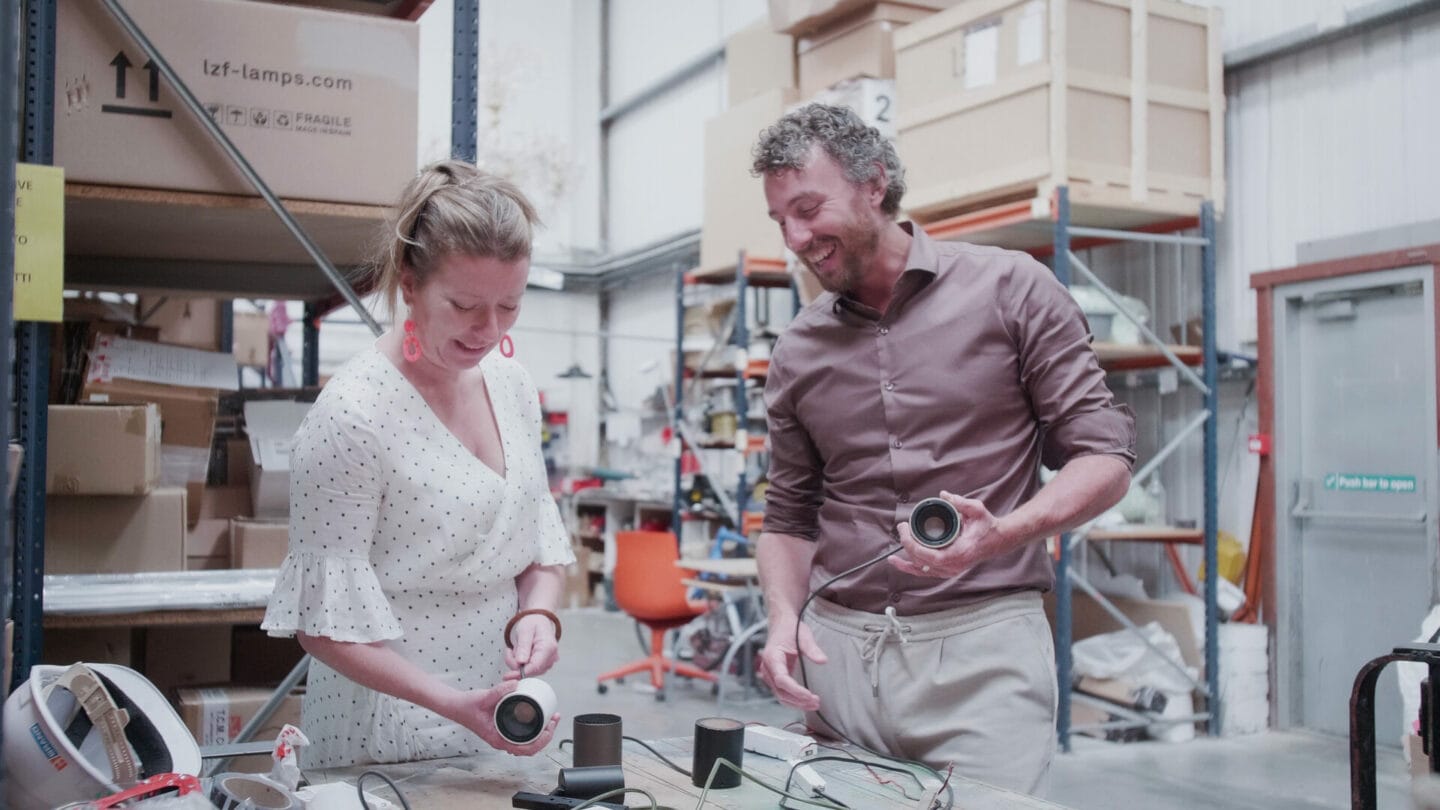
Third-generation lighting designer Willie Duggan grew up surrounded by the craft of light. But at 33, a rugby injury led to a stroke and the discovery of an undiagnosed hole in his heart.
During his recovery, Willie immersed himself in medical research. What he found changed how he saw his whole career: the light around us isn’t just an aesthetic backdrop. It is a biological signal that helps regulate our sleep, our hormones and our daily energy.
“Light isn’t just important to our health. It’s foundational to how our bodies work.”
Willie Duggan
“Circadian rhythm is… essentially the operating system of the body.”
Willie Duggan
The body clock
The biological operating system
We evolved under the natural rhythm of the sun and stars. Deep in the brain sits the suprachiasmatic nucleus (SCN), our master body clock. It sends timing signals to clocks in almost every cell and organ in the body.
Think of the SCN as the conductor of an orchestra.
Natural cues
When the conductor gets clear signals, bright daylight by day and darkness by night, the orchestra plays in harmony.
Artificial disruption
Bright, blue-rich light from overhead lights and screens after dark hands the conductor the wrong sheet music. The body reads midnight as midday, leaving us in a kind of permanent indoor jet lag.
Timing is everything
The blue light misconception
Blue light isn’t harmful in itself. Its effect depends on the time of day.
Morning and day
Sky-blue light, around 470 to 480 nm, tells the body it’s daytime. Alongside the natural morning rise in cortisol, it supports alertness, mood and energy.
Evening and night
After sunset, blue-rich light suppresses melatonin, the hormone that prepares the body for sleep and supports its overnight repair.
“No wavelength is good or bad. It’s all about timing.”
Willie Duggan
Daylight, the gold standard
One recipe, not individual ingredients
In the push for energy efficiency, modern lighting was engineered around narrow metrics and lost much of the richness of natural daylight.
Sunlight never delivers ultraviolet or blue light on its own. It balances them with red and infrared light, and around half of the sun’s energy reaching the ground is infrared, which we feel as warmth rather than see. Emerging research suggests that red and near-infrared light may support our mitochondria, the parts of our cells that produce energy.
Most standard LED lighting contains almost no infrared and has a strong blue peak. That’s why we benchmark interior lighting against daylight, rather than against a single metric.
“We need to treat the spectrum as one recipe, not a collection of individual ingredients.”
Willie Duggan
Perpetual twilight
Too dim by day, too bright by night
Most of us now spend around 90% of our time indoors, under steady light that is far dimmer than daylight and far brighter than a natural night. Our body clock misses the strong daytime signal it needs, then gets too much light when it expects darkness.
10,000–100,000 lux
Daylight outdoors
100–500 lux
Typical indoor lighting
0.001 lux
A natural night sky
The Healthy Lighting Home
Science made visible
To show how research translates into real architecture, Willie created the Healthy Lighting Home: a working home that applies biologically appropriate lighting room by room.
Light that follows the day
Tunable lighting moves from bright, daylight-rich light in the morning to warm, blue-reduced light in the evening.
Low and layered after dark
Instead of harsh overhead downlights, evenings use low-level, indirect light, such as skirting-level accents as warm as 1800K.
Flicker-free, with infrared
Quality drivers keep flicker to a minimum, and infrared sources bring back some of the warmth missing from standard LEDs.
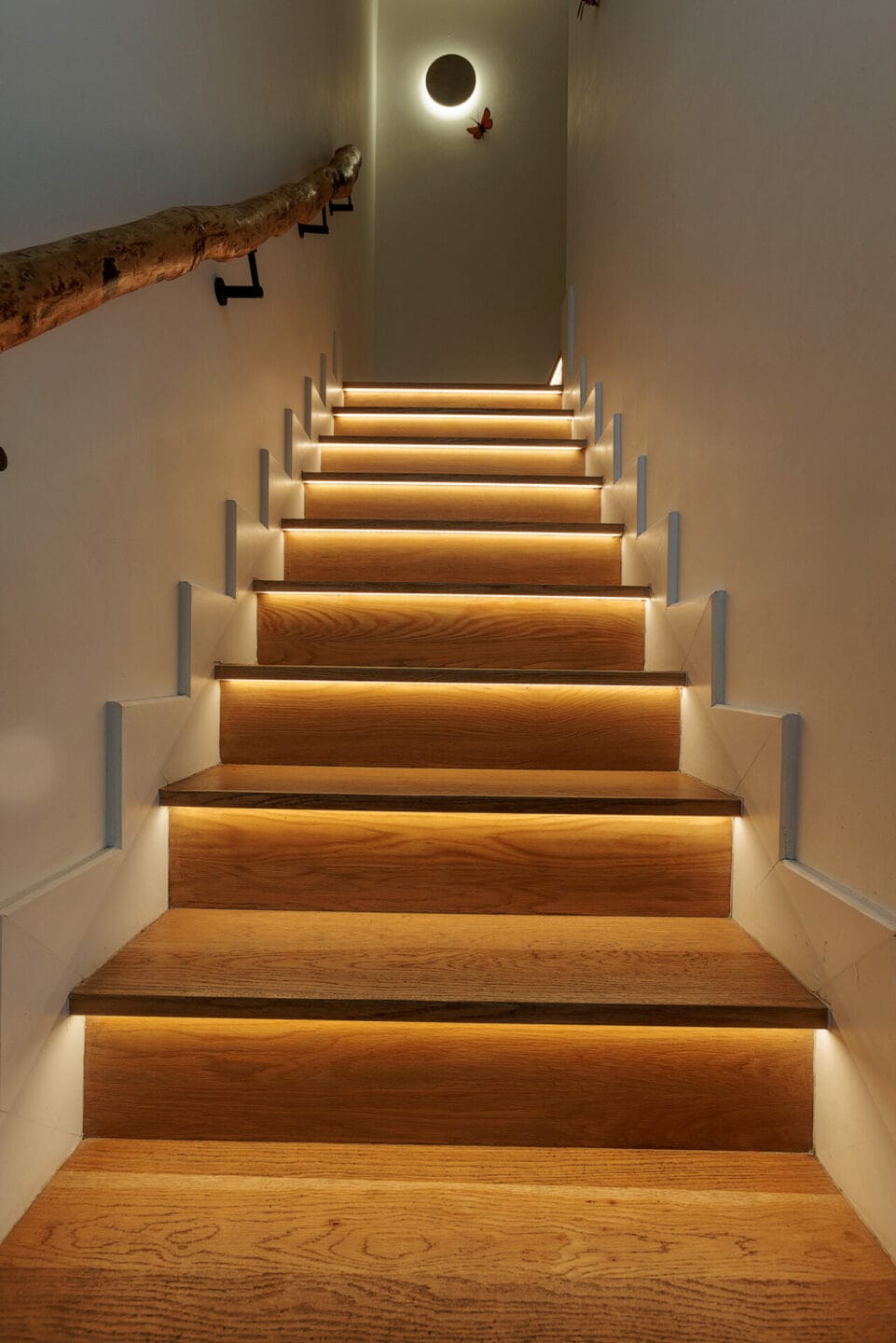
“Less light. Better quality. Better design.”
Willie Duggan
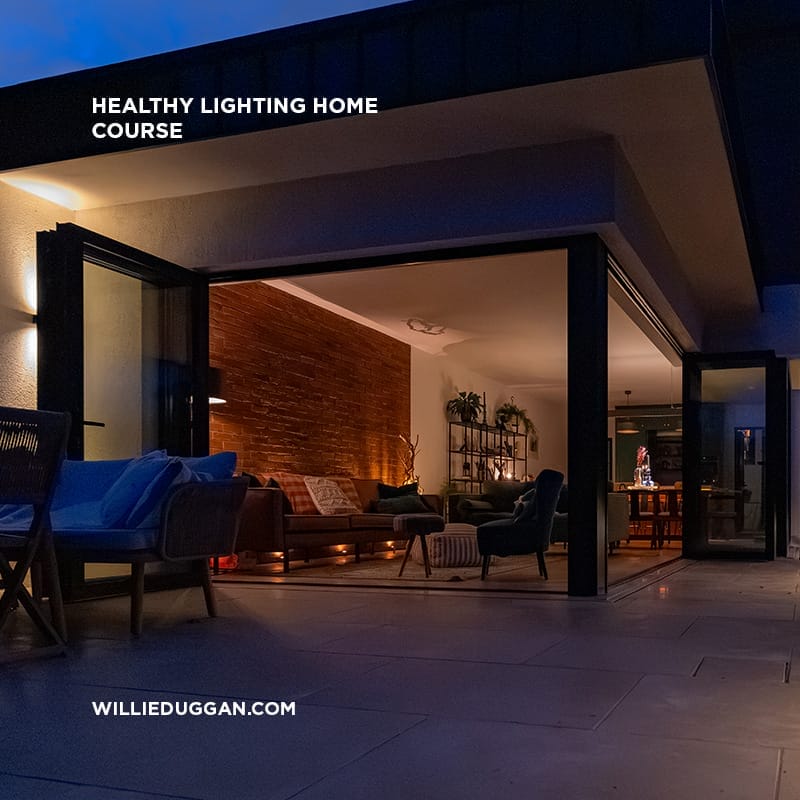
Online course
Healthy Lighting Home Course
Learn how light affects how you feel, focus and sleep, and how to apply healthy lighting room by room. Online and self-paced.
Light hygiene
Four simple steps to start today
01
Get morning light
Step outside for 10 to 20 minutes soon after waking to set your body clock for the day.
02
Bring daylight indoors
Put desks and reading spots near windows so you get daylight throughout the working day.
03
Warm, low light in the evening
After sunset, switch off bright overhead lights and use warm lamps at or below eye level.
04
Protect the night
Keep your bedroom as dark as possible while you sleep, to support melatonin and deep rest.
Questions
Frequently asked questions
Why is lighting design shifting from visual metrics to health?
For over a century, lighting design focused on visual tasks, measured in lumens, lux and colour rendering. Research since the early 2000s has shown that light entering the eye also signals the brain’s master clock, the SCN, through specialised light-sensitive cells. Because artificial lighting often delivers the wrong light at the wrong time of day, good lighting design now needs to support health as well as looks.
Is blue light bad for us?
No. Sky-blue light, around 480 nm, is valuable during the day: it helps keep us alert and keeps our body clock in step with the solar day. It becomes a problem after dark, when it suppresses melatonin and disrupts sleep.
Why does Willie call daylight the gold standard?
Daylight is the full-spectrum recipe our bodies evolved under. It balances high-energy ultraviolet and blue light with red and infrared light. Rather than engineering isolated wavelengths, we benchmark interior lighting against natural daylight.
What is perpetual twilight?
It describes the flat, steady light, typically 100 to 500 lux, that most people experience indoors all day. It is far too dim compared with daylight outdoors (10,000 to 100,000 lux) to set our body clock properly by day, yet far too bright compared with natural darkness at night.
What is the Healthy Lighting Home?
A working home created by Willie Duggan to show how circadian research can be built into beautiful interiors, using tunable lighting, low-level evening light, flicker-free drivers and infrared sources.
Do I need to replace all my light fittings to get started?
No. Tunable lighting is ideal for new builds and renovations, but you can improve your light hygiene today: get outside in the morning, switch off bright overhead lights after sunset and use low, warm lamps in the evening.
Further reading
- Brown T. M. et al. (2022). Recommendations for daytime, evening, and nighttime indoor light exposure to best support physiology, sleep, and wakefulness in healthy adults. PLOS Biology.
- Berson D. M., Dunn F. A. and Takao M. (2002). Phototransduction by retinal ganglion cells that set the circadian clock. Science.
- Gooley J. J. et al. (2011). Exposure to room light before bedtime suppresses melatonin onset and shortens melatonin duration in humans. Journal of Clinical Endocrinology & Metabolism.
- Klepeis N. E. et al. (2001). The National Human Activity Pattern Survey (NHAPS). Journal of Exposure Analysis and Environmental Epidemiology.
- Hamblin M. R. (2018). Mechanisms and mitochondrial redox signaling in photobiomodulation. Photochemistry and Photobiology.
Get in touch
Ready to design spaces for health and wellbeing?
Whether you are planning a home, designing a commercial project or want to improve the light in your own home, let’s start a conversation.
Healthy Lighting Home Course
Online and self-paced, for homeowners and self-builders.
Design consultation
Healthy lighting for a new build, renovation or commercial project.
Keynote or speaking
Talks for conferences, CPD events and teams.
General enquiry
Anything else about light and health.