![[Staging] Willie Duggan](https://staging.willieduggan.com/content/uploads/2017/10/logo.svg)
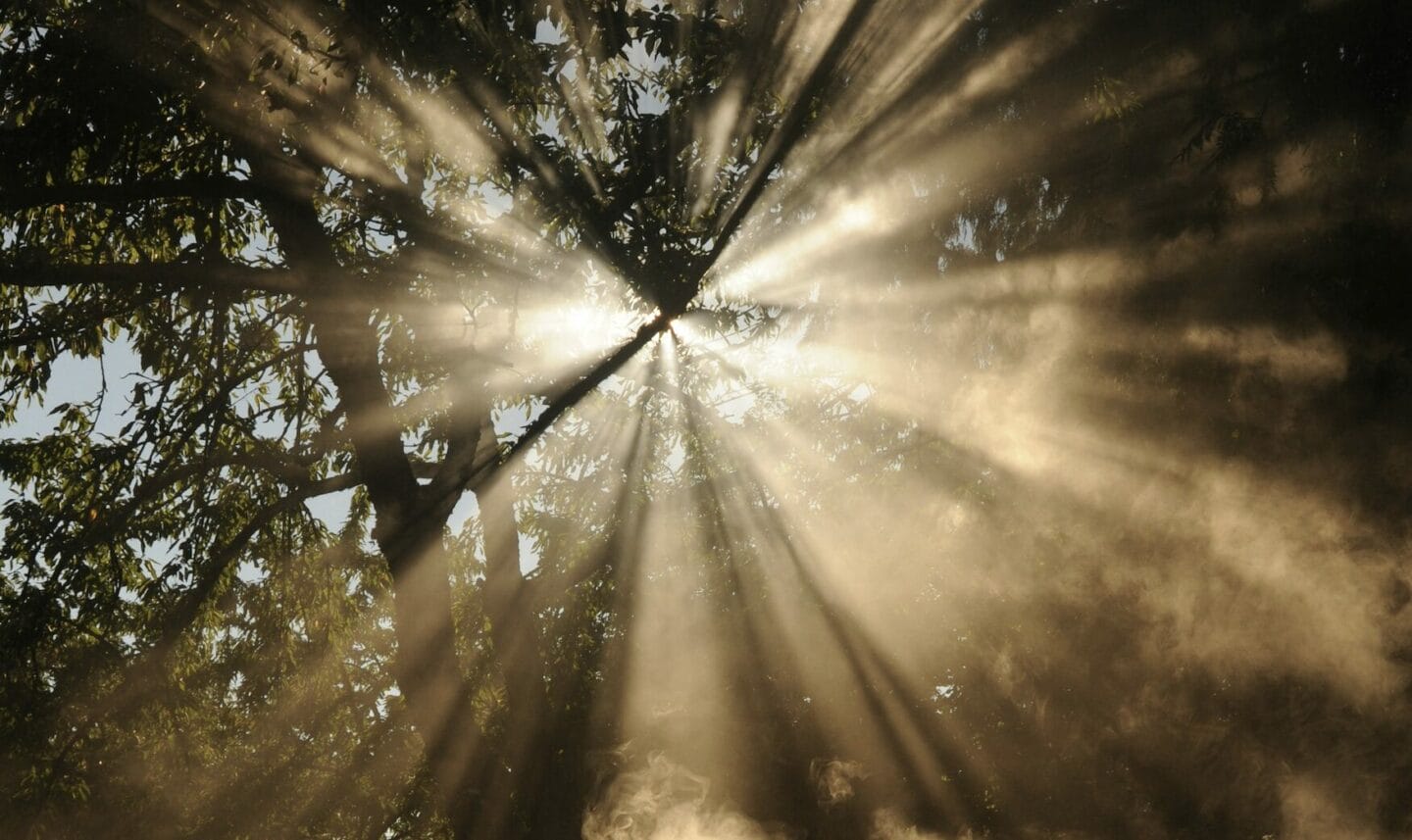
If you’ve landed here, it likely means you were at my talk, “Rethinking Light: Embracing Health-Centric Lighting Design for the 21st Century.” I’m grateful for your time and your interest in this crucial conversation.
As promised, here’s a deeper dive into some of the key insights we explored and a few supporting resources to help you take the ideas further.
Three Takeaways to Keep Thinking About
- Light at night is not neutral.
Since 2007, the World Health Organisation has recognised artificial light at night as a probable carcinogen. This isn’t fringe science, it’s a wake-up call. Blue-rich lighting late in the day suppresses melatonin, disrupts sleep, and interferes with the body’s natural repair mechanisms. - We’ve removed infrared light from our interiors, and we might be paying for it.
The shift away from incandescent lighting eliminated a consistent source of near-infrared light, which emerging science suggests supports mitochondrial function, blood flow, and healing. Quantum biology is beginning to show us just how powerful light’s unseen wavelengths can be. - Designing for a One-Lit Environment is essential.
The human body doesn’t separate daylight, screens, and artificial lighting — it experiences them all as one continuous light environment. To create truly health-supportive spaces, we must stop designing in silos. Collaboration across disciplines is essential to shape the healthy lit environments of the future.
Who We Are
Curious how we’re applying this thinking in real projects? Here’s a bit about our approach and our studio:
Where Theory Meets Practice
We’re currently exploring these ideas in a range of live environments from homes to workspaces to public places. Click here to view a sample of our work. Each project becomes a kind of laboratory a chance to test what healthier lighting can look and feel like.
Let’s Keep the Conversation Going
If you’ve got questions, counterpoints, ideas, or even a project you think might benefit from a more health-focused lighting approach, let’s talk.
Thank you again for being part of this discussion. I truly believe that by bringing science, design, and human empathy together, we can shape a future where light heals, not harms.
— Willie
References
If you’re looking to dig deeper into the material referenced during the talk, here’s a starting point:
General References
International Association of Lighting Designers. (2025). Lighting design for health, wellbeing and quality of light: A holistic approach to integrative lighting [White paper]. https://iald.org/IALD/IALD/Store/Item_Detail.aspx?iProductCode=IR-2025-WP-LDH&Category=IR
Moore-Ede, M., & Blask, D. E. (2023). Lights should support circadian rhythms: Evidence-based scientific consensus. Circadian Light Research Center. https://www.researchgate.net/publication/367276126_Lights_Should_Support_Circadian_Rhythms_Evidence-Based_Scientific_Consensus
Moore-Ede, M. (n.d.). The Light Doctor. Substack. https://lightdoctormartinmooreede.substack.com/about
Podcasts and Institutions
Huberman, A. (2022, January 10). Using light (sunlight, blue light & red light) to optimize health [Audio podcast episode]. In Huberman Lab. YouTube. https://www.youtube.com/watch?v=UF0nqolsNZc
Quantum Biology Collective. (n.d.). Institute of Applied Quantum Biology. https://www.quantumbiologycollective.com/
Quantum Biology Collective. (n.d.). Quantum Biology Collective Podcast. Spotify. https://open.spotify.com/show/4JnpMpZCNFtE5QUOTIpGjf?si=c8e83035eaf74a57
Duggan, W. (n.d.). QBC No.119 – Willie Duggan on Light, Emotion & Human-Centric Design [Audio podcast episode]. Quantum Biology Collective Podcast. Spotify. https://open.spotify.com/episode/2I0a4gBiw3nvDrotVwAVql?si=cee99fb5e8c44ad3
Zimmerman, S. (n.d.). QBC No.79 – Scott Zimmerman on Circadian Lighting and Biophilic Design [Audio podcast episode]. Quantum Biology Collective Podcast. Spotify. https://open.spotify.com/episode/45ODq4QseugPQw12AbKnZq?si=61266248b5d44da9
Red and Infrared Light
Powner, M. B., & Jeffery, G. (2024). Light stimulation of mitochondria reduces blood glucose levels. Journal of Biophotonics. https://onlinelibrary.wiley.com/doi/full/10.1002/jbio.202300521
Shinhmar, H., Hogg, C., Neveu, M., & Jeffery, G. (2021). Weeklong improved colour contrast sensitivity after single 670 nm exposures associated with enhanced mitochondrial function. Scientific Reports, 11, Article 22872. https://www.nature.com/articles/s41598-021-02261-z
Desmet, K. D., Paz, D. A., Corry, J. J., Eells, J. T., & Wong-Riley, M. T. T. (2006). Clinical and experimental applications of NIR-LED photobiomodulation. Photomedicine and Laser Surgery, 24(2), 121–128. https://pubmed.ncbi.nlm.nih.gov/16706690/
Kim, Y. J., Kim, H. J., Kim, H. L., Lee, T. R., & Shin, D. W. (n.d.). A protective mechanism of visible red light in normal human dermal fibroblasts: Enhancement of GADD45A-mediated DNA repair activity. Journal of Investigative Dermatology. [DOI or URL needed]
Light at Night and Health Risks
Windred, D. P., Burns, A. C., Lane, J. M., & Cain, S. W. (2024). Brighter nights and darker days predict higher mortality risk: A prospective analysis of personal light exposure in >88,000 individuals. Proceedings of the National Academy of Sciences, 121(43). https://www.pnas.org/doi/10.1073/pnas.2405924121
Burns, A. C., Windred, D. P., Rutter, M. K., Olivier, P., Vetter, C., Saxena, R., Lane, J. M., Phillips, A. J. K., & Cain, S. W. (2023). Day and night light exposure are associated with psychiatric disorders: An objective light study in >85,000 people. Nature Mental Health, 1, Article 135. https://www.nature.com/articles/s44220-023-00135-8
Chang, A.-M., Aeschbach, D., Duffy, J. F., & Czeisler, C. A. (2015). Evening use of light-emitting eReaders negatively affects sleep, circadian timing, and next-morning alertness. Proceedings of the National Academy of Sciences, 112(4), 1232–1237. https://pubmed.ncbi.nlm.nih.gov/25535358/
Lindqvist, P. G., Epstein, E., Nielsen, K., Landin-Olsson, M., Ingvar, C., & Olsson, H. (2016). Avoidance of sun exposure as a risk factor for major causes of death: A competing risk analysis of the Melanoma in Southern Sweden cohort. Journal of Internal Medicine, 280(4), 375–387. https://onlinelibrary.wiley.com/doi/10.1111/joim.12496
Melatonin
Imenshahidi, M., Karimi, G., & Hosseinzadeh, H. (2020). Effects of melatonin on cardiovascular risk factors and metabolic syndrome: A comprehensive review. Naunyn-Schmiedeberg’s Archives of Pharmacology. https://link.springer.com/article/10.1007/s00210-020-01915-2
Artificial Light at Night (Outdoors)
Falchi, F., Cinzano, P., Duriscoe, D., Kyba, C. C. M., Elvidge, C. D., Baugh, K., Portnov, B. A., Rybnikova, N. A., & Furgoni, R. (2016). The new world atlas of artificial night sky brightness. Science Advances, 2(6), e1600377. https://pmc.ncbi.nlm.nih.gov/articles/PMC4928945/
Zielinska-Dabkowska, K. M. (2023). Reducing nighttime light exposure in the urban environment to benefit human health and society. Science. https://www.science.org/doi/10.1126/science.adg5277
Hospitals and Recovery Light
Beauchemin, K. M., & Hays, P. (1998). Dying in the dark: Sunshine, gender and outcomes in myocardial infarction. Journal of the Royal Society of Medicine, 91(7), 352–354. https://pubmed.ncbi.nlm.nih.gov/9771492/
Imenshahidi, M., Karimi, G., & Hosseinzadeh, H. (2020). Effects of melatonin on cardiovascular risk factors and metabolic syndrome: A comprehensive review. Naunyn-Schmiedeberg’s Archives of Pharmacology. https://link.springer.com/article/10.1007/s00210-020-01915-2
Artificial Light at Night (Outdoors)
Falchi, F., Cinzano, P., Duriscoe, D., Kyba, C. C. M., Elvidge, C. D., Baugh, K., Portnov, B. A., Rybnikova, N. A., & Furgoni, R. (2016). The new world atlas of artificial night sky brightness. Science Advances, 2(6), e1600377. https://pmc.ncbi.nlm.nih.gov/articles/PMC4928945/
Zielinska-Dabkowska, K. M. (2023). Reducing nighttime light exposure in the urban environment to benefit human health and society. Science. https://www.science.org/doi/10.1126/science.adg5277
Additional Resource:
VivaRays Blue Blocking Glasses – https://vivarays.com/
DISCOUNT CODE: WILLIE DUGGAN