![[Staging] Willie Duggan](https://staging.willieduggan.com/content/uploads/2017/10/logo.svg)

A Visit to Light + Building 2026
At the beginning of March, I had the chance to visit Light + Building 2026 in Frankfurt, and it was a really enjoyable and inspiring few days. The event showcased a wide range of innovative lighting solutions, from cutting-edge designs to advanced smart systems. It was exciting to see how the industry is evolving, with a strong focus on technology, sustainability, and user experience.
AI Lighting in Action
One of the most exciting (and scary) developments I saw was the rise of AI lighting systems. At one exhibition, the lighting adjusted in real time, shifting colour temperature, dimming smoothly, and even tracking the position of tables. In areas with no activity, the lighting automatically reduced. Many systems also offer adaptive lighting, shifting colour temperature throughout the day, cooler tones in the morning to boost alertness and warmer tones in the evening to support relaxation.
It was a great example of how smart lighting systems can enhance comfort while also improving energy efficiency through intelligent automation.
The Other Side of AI in Lighting…
Interestingly, not all applications felt as innocent and straightforward. I also came across an AI street lighting system designed for surveillance. It could monitor behaviours such as speeding, littering, or incorrect parking. While innovative, it was thought-provoking and highlighted the more complex side of AI in lighting design, raising questions around privacy and control.
What Are AI Lighting Systems?
After returning from Frankfurt, I wanted to understand more about the intricacies of AI lighting systems.
AI lighting systems combines sensors, data, and intelligent algorithms to create lighting that automatically adapts to its environment. Unlike traditional lighting, these systems respond in real time to factors such as occupancy, natural daylight, and user behaviour.
Real-World Examples of AI Lighting
What makes this technology even more interesting is that it’s already being used around the world:
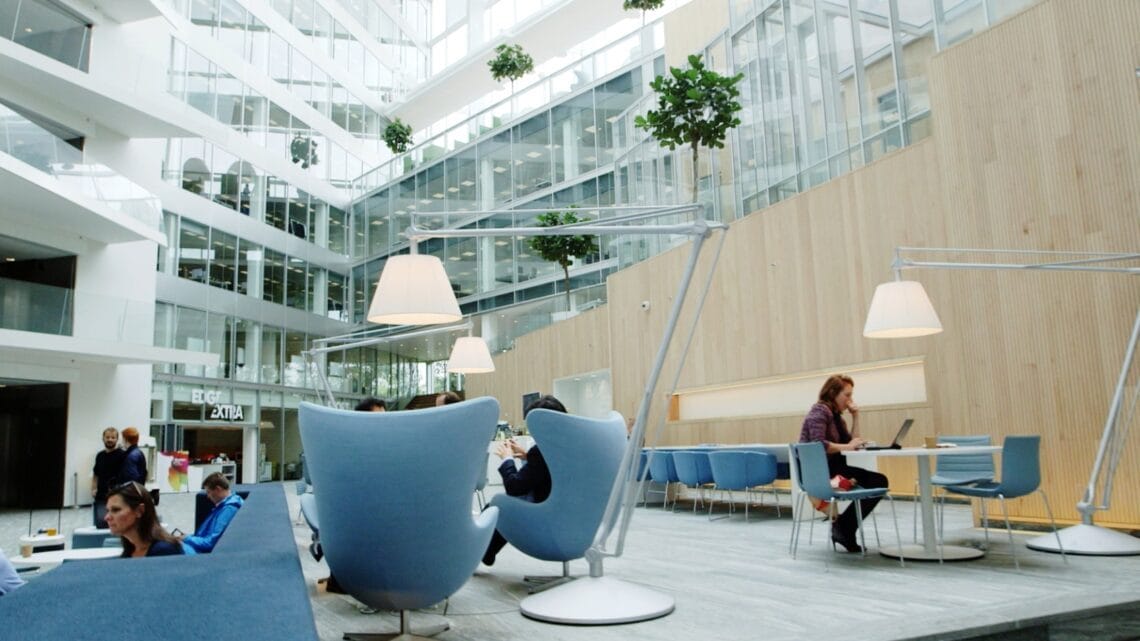
- The Edge in Amsterdam, one of the most sustainable buildings globally, uses over 6,500 AI-controlled LED lights that adjust based on occupancy and daylight, reducing energy use by up to 70%.
- Asia Square Tower in Singapore has integrated AI lighting into its design, cutting energy costs by 50% with a payback period of just four years.
- In China, AI lighting tracking systems monitor movement and behaviour in smart cities, highlighting the more intrusive side of this technology.
These examples show how AI in lighting is not just innovative, it’s practical and proven.

How AI is Influencing Lighting Design
Overall, it’s a really fascinating (and scary!) topic and one that feels very much at the early stages of something bigger. As these systems continue to develop, it will be interesting to see how they move beyond commercial spaces and begin to influence residential design, shaping more intuitive, comfortable, and personalised living environments. AI lighting systems is definitely a space to watch!
Curious to see more from Light + Building 2026? Keep an eye on our page as we share more insights, trends, and innovations from the world of lighting.