Residential · Healthy lighting home
Proving that even in a modest home, light can transform daily life.
Architect
Jenny Barnes Nolan Architect
Spaces
Entrance, kitchen and dining, living, studio, bedrooms
Year
2025
Photography
Peter Hilliard
The brief
Greater outcome with minimal resources
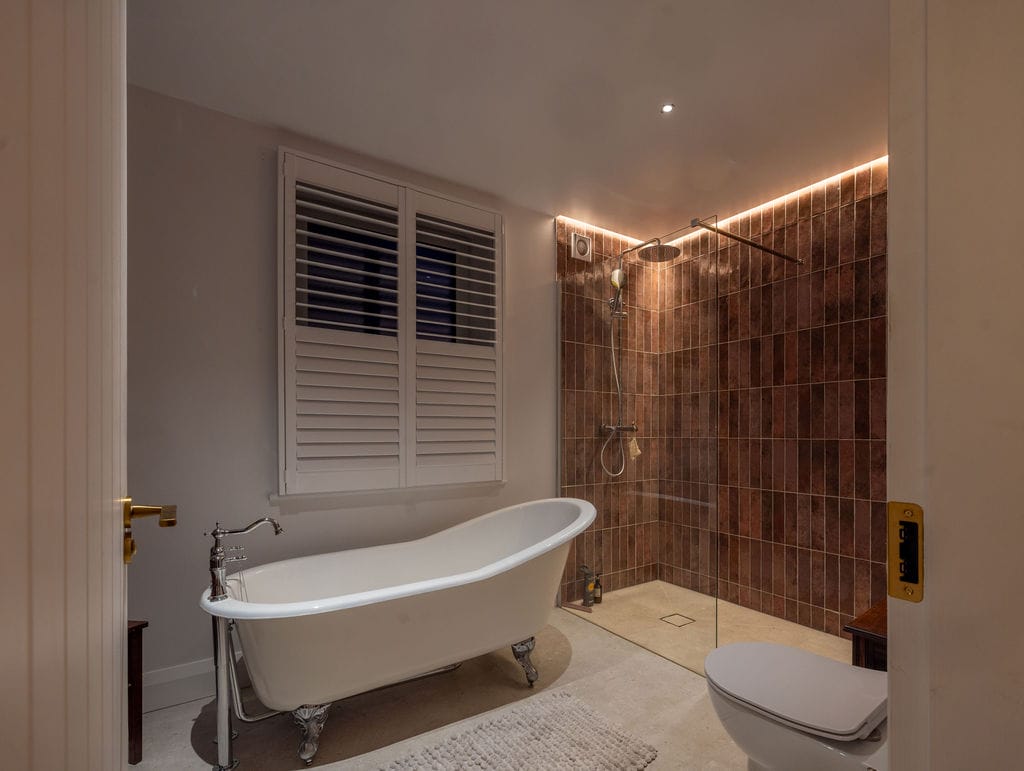
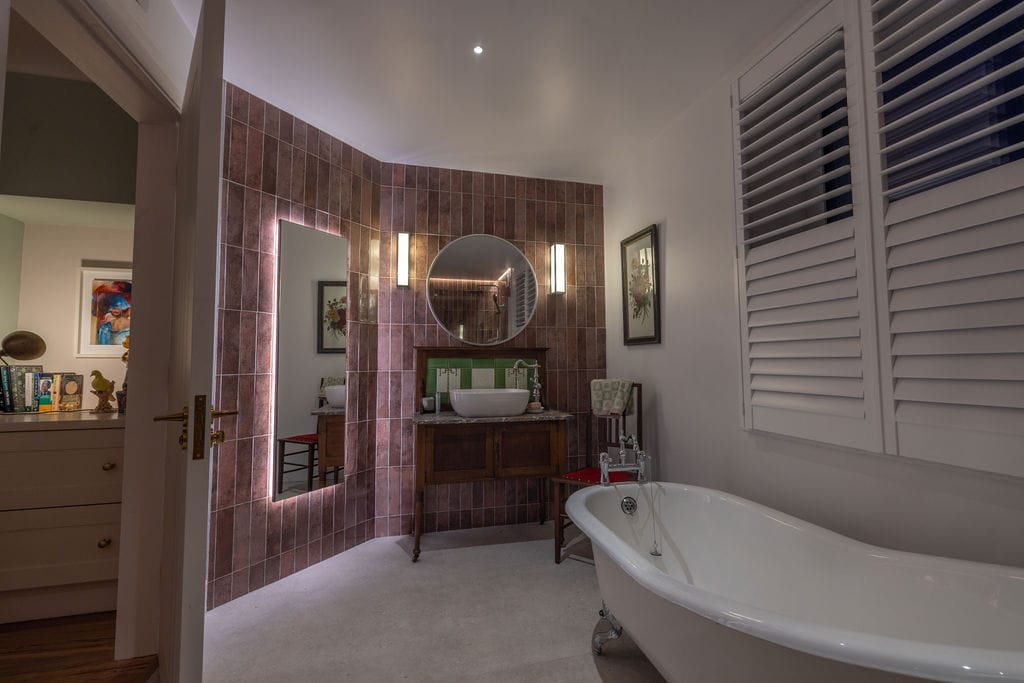
This project was designed as a healthy lighting home, balancing function, circadian health and simplicity.
The client, an artist who wanted as little technology as possible, needed controls reduced to a single push-to-dim area, with all other dimming managed at the driver.
Entrance
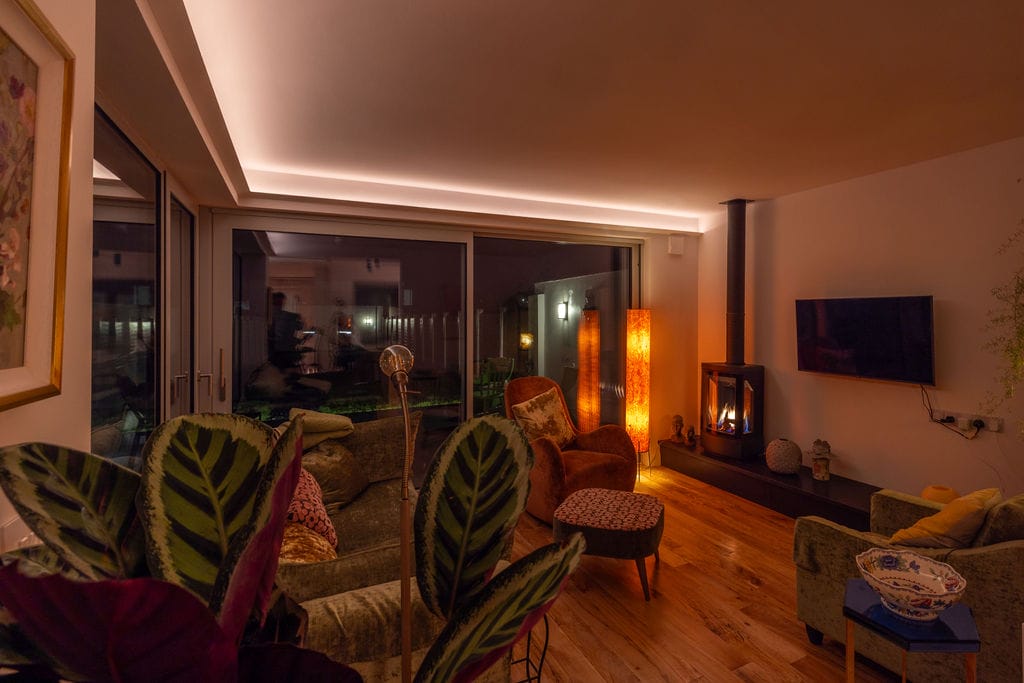
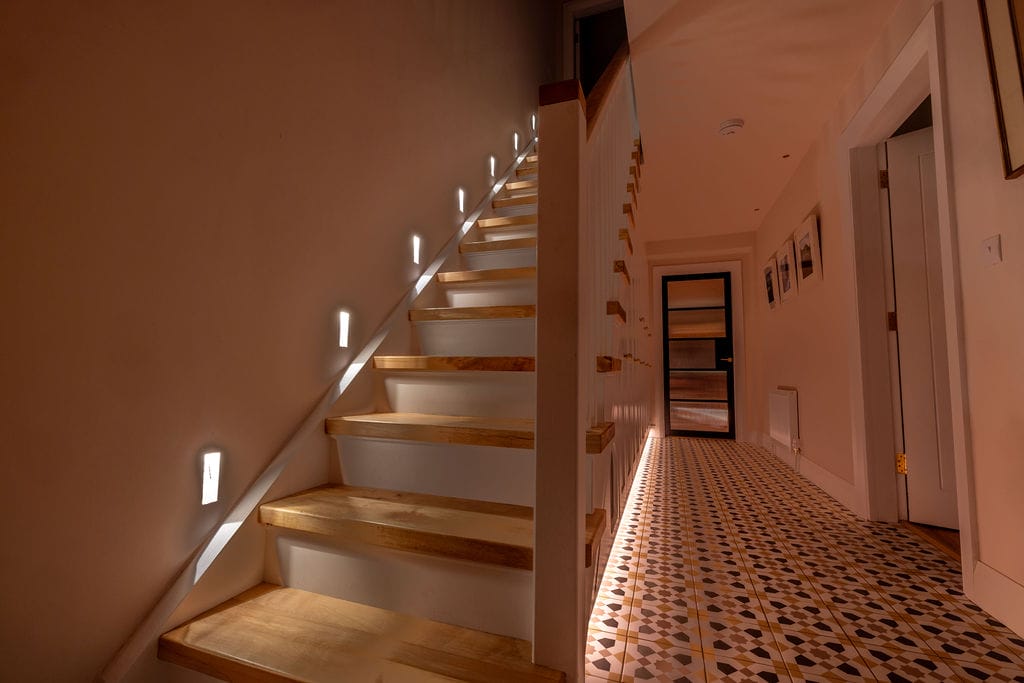
Low-glare, warm light
Kitchen and dining
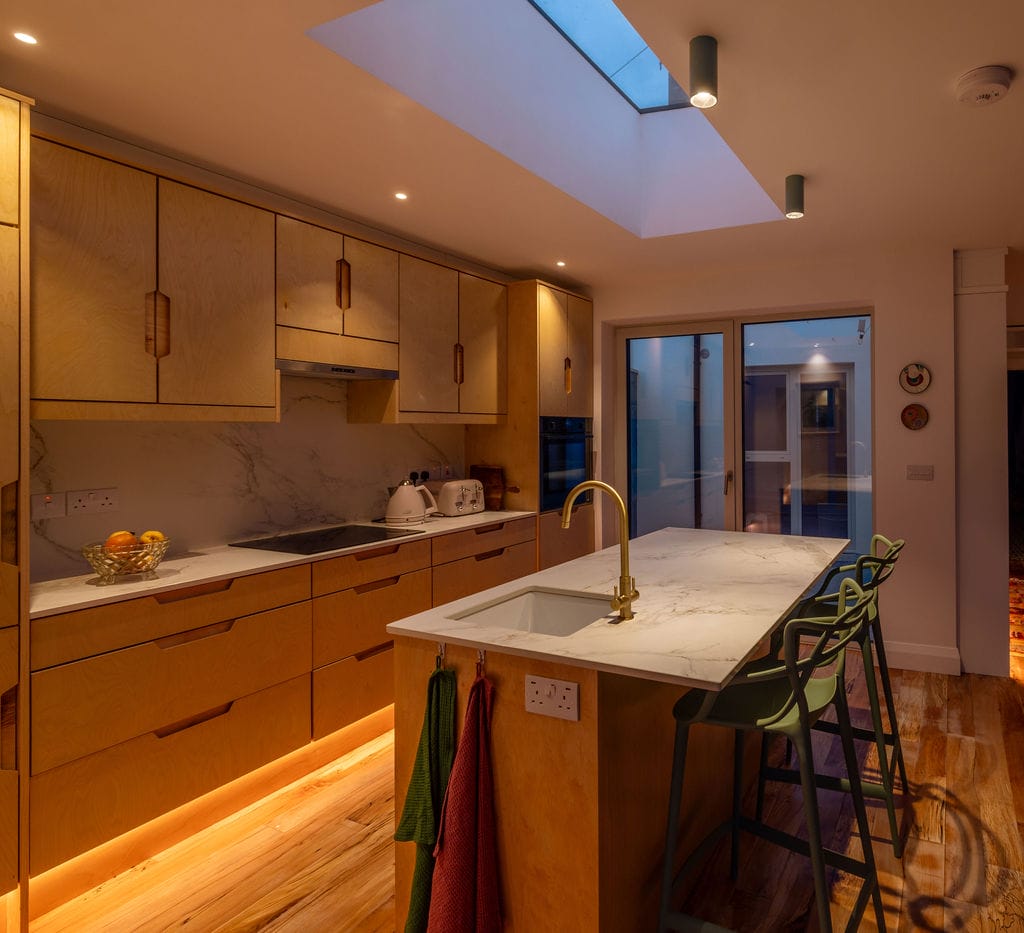
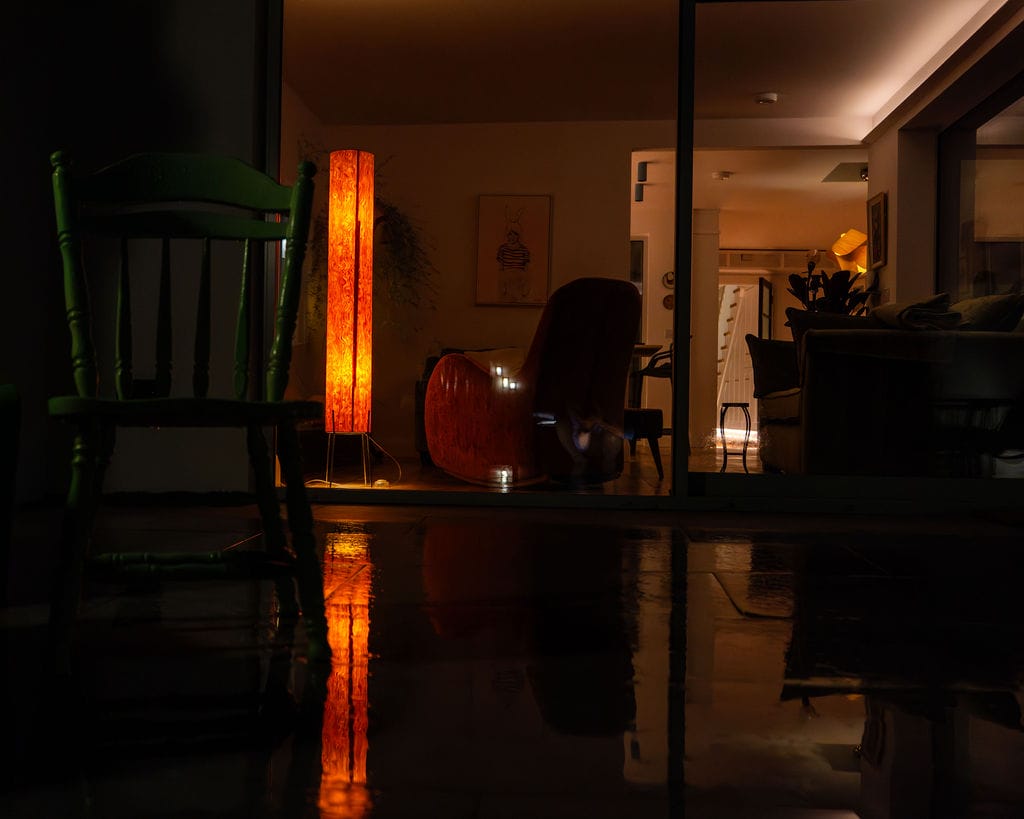
Very warm light at low levels
Bedrooms
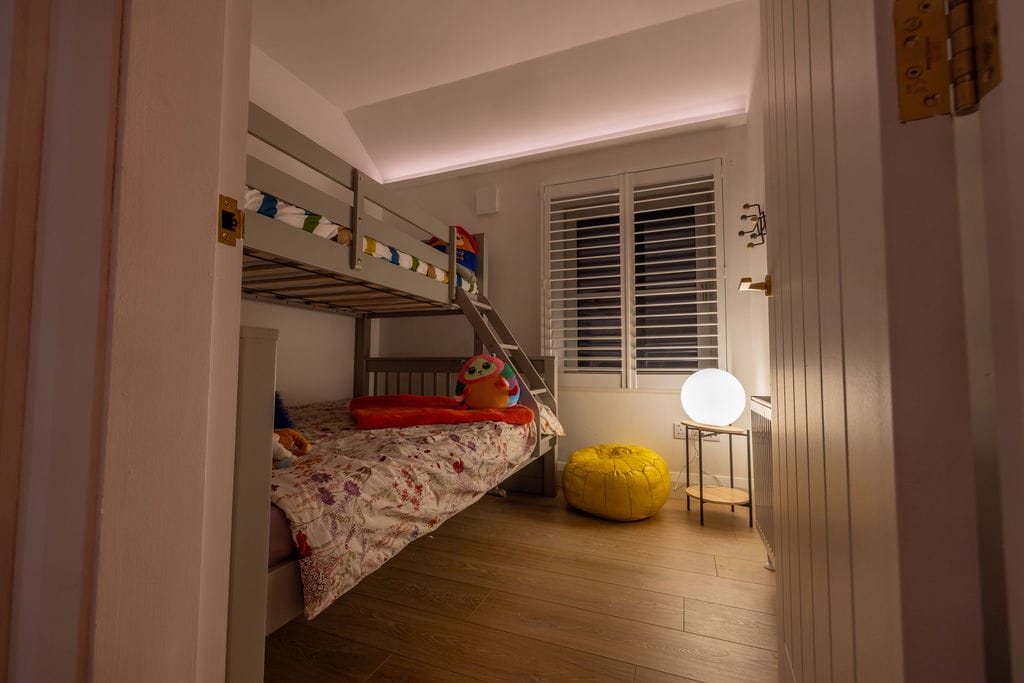
Light that supports sleep
01 · Discovery & concept
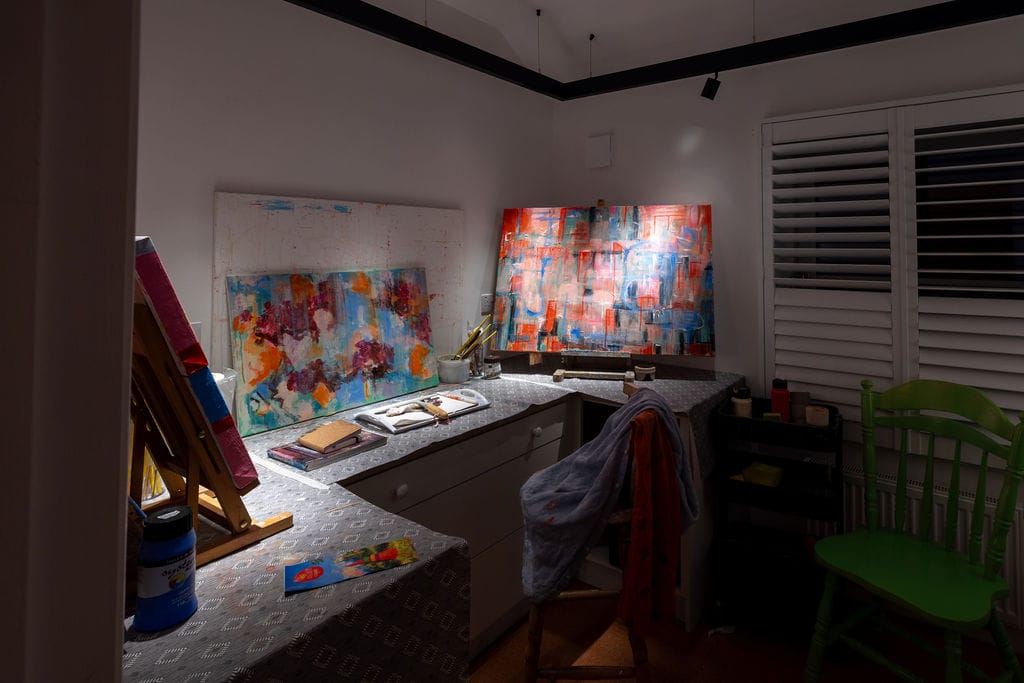
Light for art and reading
Lighting was tailored for both her art and her reading: high CRI98 fittings for accurate colour mixing, low UV to protect the artwork, and low-glare (low UGR) fittings for clarity without glare.
Most interiors are vastly overlit. We reduced energy without sacrificing quality, using very warm colour temperatures (2200K–2400K) at low levels with minimal downlights, and fittings with replaceable LED engines and accessible drivers.
02 · Design & technical planning
Tested at night, at home
Workshops and on-site mock-ups let us test beam angles, glare control and very warm colour temperatures from 1800K to 2400K.
Night-time trials confirmed a 2200K/2400K scheme, with minimal downlights to reduce overhead impact, supporting circadian rhythms and better sleep.
In numbers
CRI98
Accurate colour for mixing paint
2200K
Very warm light at low levels, alongside 2400K
Low UV
Protection for the artwork
1
Push-to-dim zone, with all other dimming at the driver
03 · Construction & procurement
Decided by living with it
Client workshops, on-site mock-ups and night-time trials meant decisions were based on lived experience, not drawings alone. Every detail was tested in place, from beam angles to dimming sequences, before being finalised.
This hands-on approach gave the client confidence and meant the scheme was built exactly as intended, with controls simplified to one push-to-dim zone and no unnecessary components.
04 + 05 · Refinement to handover
Health, function and beauty
Sustainability was treated as a process rather than a box to tick: healthier light, fewer fittings and resources conserved.
The result is a scheme that protects the art, supports reading and enhances sleep, proving that even in a modest home, light can transform daily life.
Gallery
More projects
Homes
Planning a new home or renovation? Talk to our design team about healthy light that suits how you live.
What is a healthy lighting home?
In this 1950s terrace house in Kilkenny, it meant balancing function, circadian health and simplicity: very warm 2200K–2400K light at low levels, minimal downlights and glare-free fittings that support reading and better sleep.
How was the artwork protected?
We used CRI98, low-UV fittings, which give accurate colour for mixing paint while protecting the artwork.
How simple are the controls?
Controls were reduced to a single push-to-dim zone, with all other dimming set at the driver.
How was the lighting tested?
Through client workshops, on-site mock-ups and night-time trials, testing beam angles, glare control and colour temperatures from 1800K to 2400K before anything was finalised.
Is the lighting sustainable?
We reduced energy without sacrificing quality, avoided excess downlights, and specified fittings with replaceable LED engines and accessible drivers to reduce demand for new materials.
Who was the architect?
The architect was Jenny Barnes Nolan Architect. Photography is by Peter Hilliard.